A garage door is one of the largest moving objects in any home, making safety a top priority. While most homeowners focus on the garage door opener itself, the motion sensor is just as important. This small but essential device helps prevent accidents, protects vehicles and belongings, and adds an extra layer of convenience to your daily routine.
Modern garage door motion sensors have evolved far beyond simple obstacle detection. Many now integrate with smart home systems, activate garage lighting automatically, and send alerts to your smartphone when movement is detected. Whether you’re installing a new garage door system, replacing an aging sensor, or troubleshooting a malfunction, understanding how these devices work can save time, money, and frustration.
In this guide, we’ll explain everything you need to know about garage door motion sensors, including how they work, the different types available, common problems, maintenance tips, and what to consider when choosing the best option for your home.
What Is a Garage Door Motion Sensor?
A garage door motion sensor is a safety device designed to detect movement or obstructions around your garage door. Depending on the system, it may prevent the door from closing when something is in its path or activate lights and security features when motion is detected.
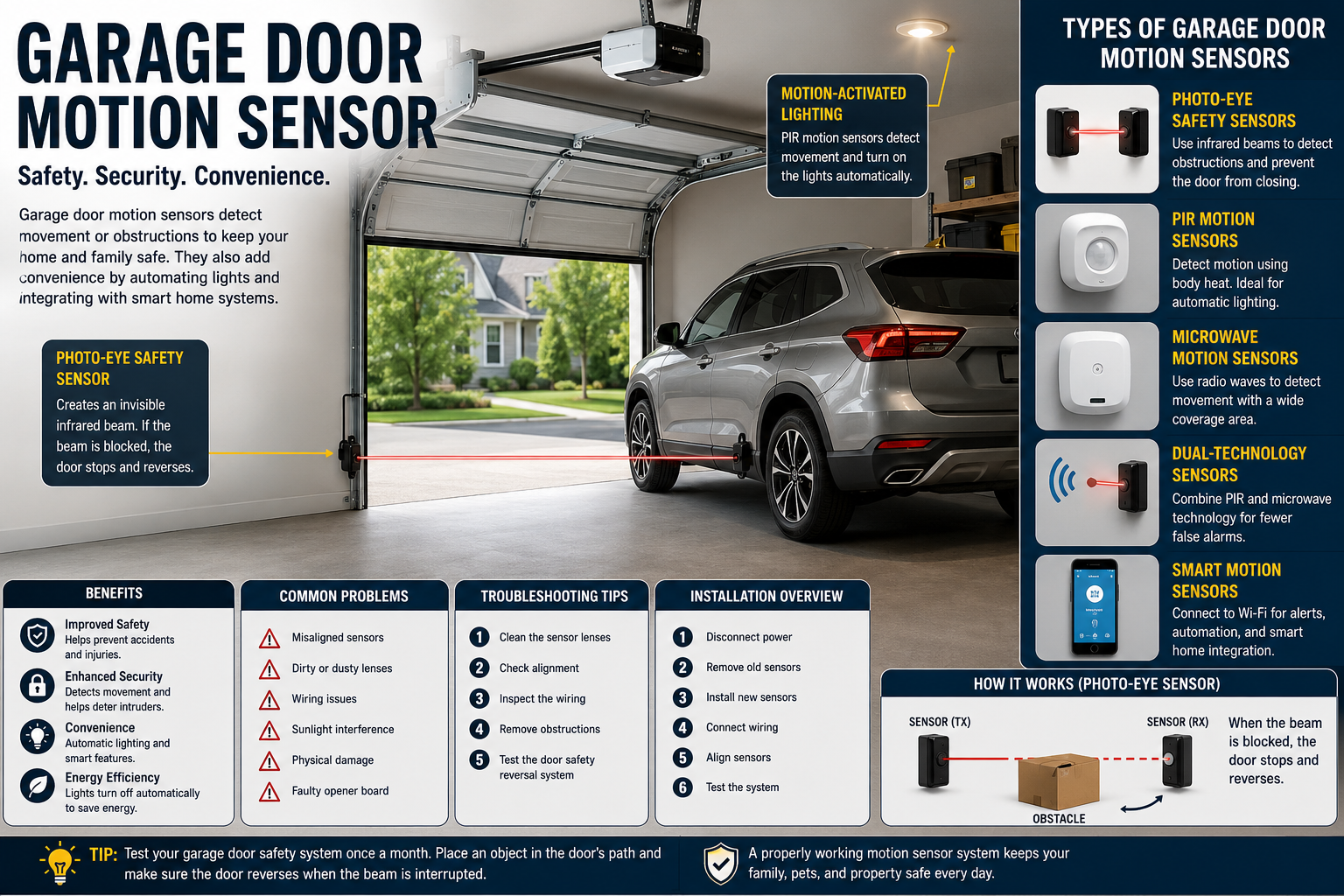
Most modern garage doors include two photo-eye safety sensors mounted a few inches above the floor on each side of the door. These sensors create an invisible infrared beam across the doorway. If a person, pet, bicycle, or vehicle interrupts the beam while the door is closing, the opener immediately stops and reverses the door to prevent injury or property damage.
Some advanced garage systems also include passive infrared (PIR) motion sensors that detect movement inside the garage. These sensors commonly activate lighting, security cameras, or smart home automation.
How Garage Door Motion Sensors Work
Garage door motion sensors rely on detection technology to identify movement or obstacles. The most common safety sensors use infrared light.
One sensor continuously sends an invisible beam to the receiving sensor on the opposite side of the garage door. As long as the beam remains uninterrupted, the opener assumes the doorway is clear and allows the door to close normally.
If the beam is blocked—even for a fraction of a second—the opener instantly stops the closing cycle and reverses the door. This safety feature dramatically reduces the risk of accidents involving children, pets, vehicles, or stored items.
Motion-activated garage lighting systems work differently. Passive infrared sensors detect changes in heat emitted by moving people or animals. Once motion is detected, connected lights automatically switch on and remain illuminated for a preset amount of time.
Types of Garage Door Motion Sensors
Photo-Eye Safety Sensors
These are the most common sensors found on residential garage doors. They provide essential safety by preventing the door from closing when an object blocks the infrared beam.
Passive Infrared (PIR) Motion Sensors
PIR sensors detect body heat and movement inside the garage. They’re commonly used to activate garage lights or security systems while consuming very little energy.
Microwave Motion Sensors
Instead of infrared light, microwave sensors emit radio waves and analyze reflected signals to detect movement. They generally offer greater coverage but are more expensive than PIR sensors.
Dual-Technology Sensors
These combine infrared and microwave detection to reduce false alarms. Both technologies must detect movement before the system activates, improving accuracy in busy environments.
Smart Motion Sensors
Smart garage sensors connect to Wi-Fi or smart home platforms, allowing homeowners to receive real-time notifications, automate lighting, monitor garage activity remotely, and integrate with voice assistants.
Benefits of Installing a Garage Door Motion Sensor
Improved Safety
The primary benefit is preventing injuries. Safety sensors help stop the garage door before it strikes people, pets, or objects.
Better Security
Motion detection discourages unwanted visitors by triggering lights, cameras, or security alarms whenever movement occurs around the garage.
Greater Convenience
Automatic lighting eliminates the need to search for a light switch when entering a dark garage.
Energy Efficiency
Motion-controlled lighting turns off automatically when no movement is detected, reducing unnecessary electricity use.
Smart Home Integration
Many modern systems work seamlessly with smart home ecosystems, allowing remote monitoring and automated routines.
Common Garage Door Motion Sensor Problems
Although garage door sensors are highly reliable, they can occasionally malfunction. Common issues include:
- Dirty sensor lenses
- Misaligned photo-eye sensors
- Loose wiring
- Damaged sensor brackets
- Moisture intrusion
- Sunlight interference
- Physical damage from vehicles or stored equipment
- Faulty garage door opener logic board
Fortunately, many of these problems can be resolved without replacing the entire system.
Signs Your Motion Sensor Needs Attention
Your garage door sensor may require inspection if you notice any of the following:
- The garage door refuses to close.
- The door immediately reverses after starting to close.
- Indicator lights on the sensors blink continuously.
- Garage lights fail to activate with motion.
- The system works inconsistently throughout the day.
- Motion detection range becomes noticeably shorter.
These symptoms often indicate alignment issues, dirty lenses, or electrical problems.
How to Troubleshoot a Garage Door Motion Sensor
Clean the Sensor Lenses
Dust, spider webs, and debris can interfere with the infrared beam. Gently wipe both sensor lenses using a soft microfiber cloth.
Check Sensor Alignment
Both sensors should point directly at each other. Even a slight shift can interrupt communication.
Inspect the Wiring
Look for loose, frayed, or damaged wires between the sensors and the garage door opener.
Remove Obstructions
Ensure no boxes, tools, bicycles, or other objects block the sensor beam.
Test the Door
Place a cardboard box beneath the closing door. If the system is working properly, the door should reverse immediately when the beam is interrupted.
Can You Replace Garage Door Motion Sensors Yourself?
In many cases, yes. Replacing standard photo-eye sensors is a straightforward DIY project for homeowners comfortable with basic electrical work.
The general process includes:
- Disconnect power to the garage door opener.
- Remove the old sensors.
- Install the replacement sensors in the same position.
- Connect the wiring.
- Align the sensors carefully.
- Restore power and test the system thoroughly.
If your garage door still fails to operate correctly after replacement, the problem may lie with the opener’s control board or wiring, and professional service may be necessary.
How Much Does Garage Door Motion Sensor Replacement Cost?
Replacement costs vary depending on the garage door brand, sensor type, and labor rates.
Typical price ranges include:
- Replacement sensor kit: $20–$80
- Smart motion sensor: $40–$150
- Professional installation: $75–$200
- Complete garage door safety system replacement: $150–$400
Investing in quality sensors is relatively inexpensive compared to the potential cost of accidents or garage door damage.
Maintenance Tips
Regular maintenance helps extend the lifespan of your garage door motion sensors.
- Clean the sensor lenses every few months.
- Check alignment after accidental bumps.
- Keep storage items away from the sensor beam.
- Inspect wiring annually.
- Test the safety reversal system monthly.
- Replace damaged brackets immediately.
- Keep the garage door tracks clean for smooth operation.
Routine inspections can prevent unexpected failures and improve long-term reliability.
Choosing the Best Garage Door Motion Sensor
When selecting a new sensor, consider the following factors:
- Compatibility with your garage door opener
- Detection range
- Indoor or outdoor use
- Smart home compatibility
- Installation difficulty
- Weather resistance
- Manufacturer warranty
- Customer reviews and reliability
Choosing a high-quality sensor from a trusted manufacturer can provide years of dependable performance.
Frequently Asked Questions
Can a garage door work without motion sensors?
Most modern garage door openers are designed to operate with functioning safety sensors. Bypassing them is unsafe and may violate local building codes.
Why is my garage door sensor blinking?
Blinking indicator lights usually signal sensor misalignment, wiring issues, or an interrupted infrared beam.
Can sunlight affect garage door sensors?
Yes. Direct sunlight may interfere with infrared sensors under certain conditions. Proper alignment and protective sensor shields can help minimize this issue.
How long do garage door motion sensors last?
With regular maintenance, most quality sensors last between 10 and 20 years.
Are garage door sensors universal?
Some replacement sensors are compatible with multiple brands, but many are designed specifically for certain garage door opener models. Always verify compatibility before purchasing.
Final Thoughts
Garage door motion sensors are one of the most important safety features in any modern garage door system. Whether they prevent the door from closing on an obstacle, activate lights when someone enters, or integrate with a smart home security system, these sensors improve both safety and convenience.
Regular cleaning, proper alignment, and routine testing can keep your sensors functioning reliably for years. If your garage door begins behaving unexpectedly, inspecting the motion sensor should be one of your first troubleshooting steps. A small investment in maintenance or replacement today can help prevent costly repairs and ensure your garage door continues operating safely and efficiently for years to come.
